Bulk fuel is usually cheaper for vehicles that return to your depot every day, and fuel cards are usually cheaper for vehicles that spend nights away. That's why many fleets get the best price by using both.
The deciding factor is how many litres your back-to-base vehicles use each month, compared with what a tank costs you to run.
This guide shows you how to work out your break-even point and which vehicles to put on each option.
Jump to:
- Bulk fuel vs fuel cards: how the two compare
- How to work out your break-even litres per month
- Which routes suit bulk fuel or fuel cards?
- When does a hybrid bulk and fuel card setup make sense?
- When are fuel cards the best choice?
- When is bulk fuel delivery the best choice?
- Get your free quote with Your NRG
- Frequently asked questions
Bulk fuel vs fuel cards: how the two compare
Bulk fuel suits high, predictable volumes used at one site, and fuel cards suit vehicles that refuel wherever the route takes them. The biggest differences come down to price, where you fill up, upfront cost and admin.
| Bulk delivery to your depot | Fuel cards | |
|---|---|---|
| Where you refuel | Your own tank, on site | Forecourts on the card's network |
| Price | Usually lower per litre, agreed per delivery | Discounted pump price or a fixed weekly price, depending on the card |
| Fuel types | Road diesel (DERV) | Diesel only on some cards, or diesel and petrol on others |
| Upfront cost | Tank, pump and fuel management system | Usually none |
| Ongoing cost | Tank maintenance, inspections and stock control | Any card or transaction fees |
| Cash flow | You pay for fuel before you use it | Most cards bill you after your drivers fill up – prepaid cards need topping up first |
| Driver time | Fill up at the start or end of a shift | Detours to forecourts on the network |
| Control | Your fuel management system logs every draw | Card reports show every transaction |
| Best for | Back-to-base vehicles | Vehicles on the road overnight or covering wide areas |
How to work out your break-even litres per month
To find your business's break-even litres per month, divide what your tank costs to run each month by the amount bulk saves you per litre. That gives you the monthly litres your back-to-base vehicles need to use for bulk to come out cheaper.
Below that volume, fuel cards usually cost less overall.
The formula
Break-even litres per month = monthly cost of running a tank ÷ saving per litre
-
Add up your monthly tank costs
These can include:
- The tank, pump and fuel management system, spread over their working life
- Servicing, inspections and calibration
- Insurance and site security
- Admin time for ordering, stock checks and reconciliation
- Unaccounted-for fuel, such as theft or recording errors
-
Work out your saving per litre
Compare your delivered bulk price with what you pay on cards, after any card fees. Price it using quotes for your actual volumes, because headline prices move with the market.
The Department for Energy Security and Net Zero (DESNZ) publishes weekly road fuel prices, which give you an official pump price benchmark to check card prices against.
-
Divide
Divide your monthly tank costs by your saving per litre. You now know the volume your back-to-base vehicles need to use each month for bulk to work out cheaper.
Illustrative example
A depot with tank running costs of £300 a month needs these volumes to break even, depending on the saving per litre.
| Saving per litre | Break-even litres per month |
|---|---|
| 5p | 6,000 |
| 8p | 3,750 |
| 12p | 2,500 |
A smaller saving pushes the break-even point up sharply. At 5p a litre, you need more than twice the volume you'd need at 12p. Work from real quotes for your fleet, because averages can put you on the wrong side of the line.
For a closer look at fuel costs, see our guide to fleet fuel costs per mile and surcharges.
Which routes suit bulk fuel or fuel cards?
Vehicles that come back to your depot every shift – multi-drop, local delivery and out-and-back regional work – suit bulk fuel.
Long-haul trucks and vans that start from drivers' homes suit fuel cards, and regional work with occasional nights out suits a mix of both.
A vehicle can only use bulk fuel if it regularly passes your tank, so start by sorting your fleet by how often each vehicle returns to base.
| Route | Returns to depot | Usually suits |
|---|---|---|
| Multi-drop and local delivery | Every shift | Bulk |
| Regional distribution, out and back in a day | Every shift | Bulk |
| Regular runs between your own sites (shuttle and trunking) | Most shifts, at one or more sites | Bulk at each site with a tank |
| Regional work with occasional nights out | Most shifts | Hybrid |
| Long-haul and tramping | Rarely | Fuel cards |
| Field service vans that start from home | Rarely or never | Fuel cards |
Volume matters as much as route. A handful of back-to-base vans using a few hundred litres a month may not clear the break-even point, while a large depot fleet usually will.
Not sure which mix suits your fleet?
Tell us about your vehicles and how much fuel you use, and we'll price the right mix of bulk delivery and fuel cards for your business.
When does a hybrid bulk and fuel card setup make sense?
A hybrid setup with both bulk fuel and fuel cards makes sense when part of your fleet returns to base daily and part doesn't. You fuel the back-to-base vehicles from your tank and give cards to the rest.
Cards also cover the gaps a tank leaves:
Nights away
Vehicles that normally use the tank can top up on a card when a job runs over.
Depots without a tank
Smaller sites can run on cards, while your main depot runs on bulk.
Contingency
If a delivery is delayed or your tank is out of service, cards keep your vehicles moving.
Growth
New routes can start on cards until their volume justifies a tank.
Every litre then goes through the cheapest channel available to that vehicle. Run the break-even calculation for each depot, then put any depot or vehicle that falls short on cards.
Want both options priced for your fleet?
When are fuel cards the best choice?
Fuel cards are the better choice when your vehicles spend more time away from base than at it, or when your back-to-base volume falls short of the break-even point. You avoid the upfront cost of a tank, and your drivers can refuel on the road.
InterFuels (Your NRG's sister company) compares cards accepted at more than 7,600 forecourts and motorway refuelling points across the UK. You can choose fixed weekly pricing, which lets you budget with confidence when pump prices move.
Compare fuel cards with InterFuels
When is bulk fuel delivery the best choice?
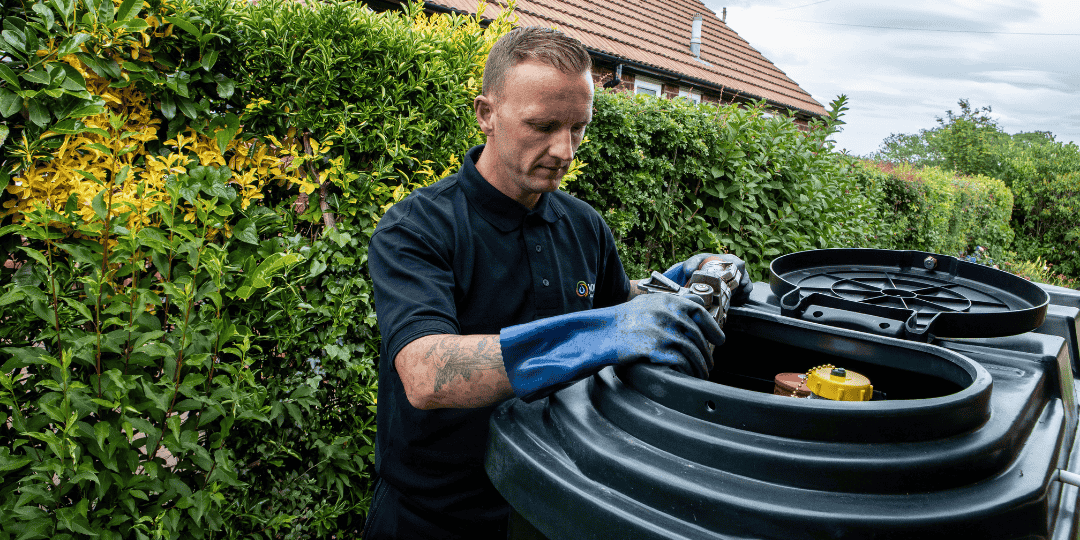
Bulk fuel delivery is the better choice when your back-to-base vehicles use enough fuel each month to clear the break-even point and you have room for a compliant tank. Your drivers fill up before or after a shift, with no detours to forecourts.
Check the storage rules before you install a tank
In England, businesses that store oil above ground in a container holding more than 200 litres must follow the oil storage regulations for businesses. These cover tank standards, bunding (a secondary wall that catches leaks) and where you can put the tank.
Get your free quote with Your NRG
Tell us your depots, vehicle numbers and monthly litres, and we'll price bulk delivery for the vehicles that suit it, while InterFuels compares fuel cards for the rest.
Your deliveries are planned by a team with decades of experience, and you can order all your bulk commercial fuels on one account, with one point of contact.
22 depots
nationwide
Deliveries across England and Scotland
ISO certified
quality and environment
ISO 9001 and ISO 14001
UKIFDA
members
Part of the UK's fuel distributors' association
Get your free, no-obligation commercial quote
Talk to us about your bulk fuel needs, and we'll price the vehicles that suit a tank.
For the rest of your fleet, compare fuel cards at InterFuels.
Frequently asked questions
These answers cover the questions fleet managers ask most often when choosing between bulk fuel and fuel cards.
Q. Is it cheaper to buy diesel in bulk for a fleet?
Buying diesel in bulk is cheaper for a fleet once the per-litre saving outweighs the running costs of an on-site tank.
Bulk diesel often costs less per litre than fuel card prices, so it can suit vehicles that return to base. The bulk and fuel card markets price separately, though, so the gap between them moves. Bulk pays off when monthly litres multiplied by that saving exceed tank costs – below that, fuel cards usually win.
Q. Do you need a licence to store diesel at business premises?
You don't need a licence to store diesel at business premises, but oil storage regulations apply.
In England, storing oil above ground in containers over 200 litres means meeting the Control of Pollution (Oil Storage) (England) Regulations 2001, covering tanks, bunding and location. Scotland, Wales and Northern Ireland have separate rules, and larger installations may need planning permission.
Q. Can you use fuel cards and bulk fuel together?
Fleets can use fuel cards and bulk fuel together, and many mixed fleets do.
Back-to-base vehicles fill up from an on-site tank, while vehicles that spend nights away or work from smaller depots use fuel cards. Cards also provide cover if the tank is out of service, and a break-even calculation for each depot shows where the split should fall.
Q. Are fuel cards worth it for a small fleet?
Fuel cards are usually worth it for a small fleet, because a small fleet rarely uses enough fuel to cover the running costs of a bulk tank.
Cards also avoid upfront investment in on-site storage, and card reports log every fuel transaction automatically.