Jump to:
- How long does diesel last in storage?
- What shortens the shelf life of stored fuel?
- What are the warning signs of degraded fuel?
- How do you test stored fuel?
- How do you create a fuel rotation schedule?
- What should you do if stock is going to outlast its shelf life?
- Reliable fuel deliveries with Your NRG
- Frequently asked questions
How long does diesel last in storage?
Diesel lasts between six and 12 months in storage, depending mainly on whether it contains FAME (fatty acid methyl ester, the biodiesel component) and how well the tank is looked after. Kerosene lasts longer because it is more chemically stable and absorbs less water.
Treat the figures below as planning windows. They assume a tank is in good condition, with minimal water and steady temperatures. Poor storage conditions shorten them considerably.
| Fuel type | Typical planning window | Why |
|---|---|---|
| Diesel with up to 7% FAME | Up to 6 months | FAME absorbs water and oxidises faster, feeding microbial growth |
| FAME-free gas oil | Up to 12 months | No FAME, so it absorbs less water and stays stable for longer |
| Kerosene (heating oil) | Around 18–24 months | Highly refined fuel that resists oxidation, though water remains a risk |
Most standard UK diesel and gas oil now contains up to 7% FAME. Unless your supplier has confirmed your fuel is FAME-free, plan around the six-month window.
What shortens the shelf life of stored fuel?
Water is the biggest single cause of stored fuel going off, followed by oxygen, heat and dirt. Each one speeds up degradation, and they make each other worse when combined.
- Water and condensation: A part-empty tank draws in moist air, which condenses on cold walls and settles at the bottom. Microbial growth, often called diesel bug, thrives where water meets fuel.
- Headspace: The more air above the fuel, the more condensation and oxidation you get. Keeping tanks well filled reduces both.
- Temperature changes: Outdoor tanks that warm by day and cool at night draw in more moisture than shaded or insulated ones.
- Tank condition: Rust, old sediment and leftover sludge contaminate every new delivery.
- Mixing old and new stock: Topping up degraded fuel with fresh fuel shortens the life of the whole tank.
Tank design and siting also matter for compliance. If your business in England has an oil container that can hold more than 200 litres, the oil storage regulations for businesses set rules on containers, bunding and location.
Wales has its own regulations with the same 200-litre threshold, while in Scotland the rules cover business oil containers of any size.
What are the warning signs of degraded fuel?
The clearest warning signs are fuel that looks hazy or dark, sludge or slime in the tank, and filters that block more often than they should. Most degraded fuel shows at least one of these before it causes a breakdown.
Signs in the fuel itself
- Cloudy, hazy or noticeably darker fuel compared with a fresh sample
- Dark sludge, slime or a stringy layer where water meets fuel
- Free water at the bottom of a sample jar or on a dipstick
- A sour or unusual smell
Signs in your equipment
- Filters blocking or needing changing more often
- Burners locking out, smoking or lighting unreliably
- Engines hunting, losing power or struggling to start
- Corrosion on tank fittings, pipework or pump components
If you spot any of these, test the fuel before your next delivery. Adding fresh fuel to a contaminated tank spreads the problem.
How do you test stored fuel?
You test stored fuel by drawing a sample from the bottom of the tank and checking it for water, microbial growth and sediment. Simple on-site checks catch most problems early, and laboratory analysis confirms whether the fuel still meets its fuel standard.
On-site checks (monthly for slow-moving tanks)
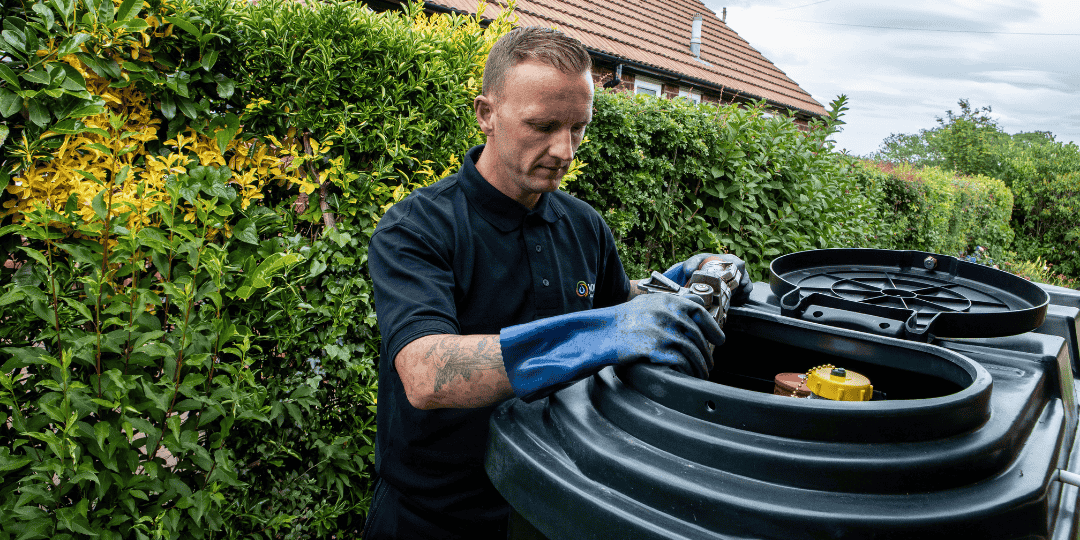
- Bottom sample: Draw fuel from the lowest point into a clear jar. Good fuel is clear and bright, with no water layer or debris.
- Water-finding paste: Apply it to a dipstick to show whether free water has collected at the bottom of the tank.
- Microbial dip-slide kits: Low-cost kits that show whether bacteria or fungi are growing. Results usually take a few days.
Laboratory analysis (at least once a year, or when on-site checks flag a problem)
- Water content
- Microbial contamination count
- Particulate contamination
- Oxidation stability, which matters most for fuel containing FAME
Log each result against the tank and date. Over time, those records show you when a tank is starting to turn.
How do you create a fuel rotation schedule?
You create a fuel rotation schedule by comparing how long each tank takes to turn over with the planning window for its fuel, then setting deliveries so no stock sits long enough to degrade.
-
Work out your turnover time
Divide the volume you normally hold by your average monthly use. A tank holding 5,000 litres and using 600 litres a month takes just over eight months to turn over.
-
Compare it with the planning window
If turnover takes longer than the window for that fuel, your oldest fuel will degrade before you use it.
-
Shorten the turnover
Order smaller, more frequent deliveries, hold less stock or switch the tank to a more stable fuel. Cutting the normal fill in the example to 3,000 litres brings turnover down to five months.
-
Set test and delivery dates
Add both to your maintenance calendar so they don't depend on anyone remembering.
What should you do if stock is going to outlast its shelf life?
If your stock is going to outlast its shelf life, cut the time future fuel spends in the tank and recover what's already there. The right option depends on how slowly the tank turns over and what you use the fuel for.
- Smaller, more frequent deliveries: The simplest fix for tanks that turn over just outside their window.
- FAME-free fuel: Suits slow-moving tanks where FAME content is the main risk. See our FAME-free gas oil page and check the duty note below before ordering.
- Fuel polishing: Filters water and sediment out of fuel that's degrading but still usable.
- Tank cleaning: Removes the sludge and sediment that contaminate each new delivery.
- Uplift and replacement: For fuel that testing shows is beyond recovery.
Under HMRC Excise Notice 75, businesses can only use rebated gas oil (red diesel) for specific entitled uses, such as agriculture, or for heating and power at non-commercial premises. Most manufacturing sites therefore need duty-paid fuel for plant, gas oil boilers and generators.
Kerosene used for heating is the exception and can stay rebated. Ask us which fuel and duty rate suit your use before switching.
Reliable fuel deliveries planned around your turnover with Your NRG
Your NRG supplies fuel to businesses across the UK, with delivery schedules planned around how fast each tank is used, so your stock stays inside its planning window.
4.8 ★
on Feefo and Trustpilot
Across more than 24,000 verified reviews
Platinum
Feefo award
Trusted Service Award winner since 2020
22 depots
nationwide
With nearly 150 tankers on the road
1 account
one contact
Diesel, FAME-free gas oil and kerosene through one account manager
Get a delivery schedule built around your tanks
Send us your tank sizes, fuel types and average monthly use, and we'll quote a delivery schedule that keeps each tank within its planning window.
Explore our full range of bulk fuels for business or learn more about FAME-free gas oil.
Frequently asked questions
These answers cover the questions we're asked most often about how long diesel and kerosene last in storage and how to keep stored fuel usable.
Q. Does diesel go off in storage?
Diesel does go off in storage, degrading over time through oxidation, water absorption and microbial growth.
Diesel containing up to 7% FAME is best used within about six months, and FAME-free diesel within about 12 months. A clean, dry, well-filled tank slows degradation but can't stop it completely.
Q. Can you use diesel that's over a year old?
Diesel stored for over a year is only safe to use if laboratory testing confirms it still meets its fuel standard.
Older diesel often contains water, sediment or microbial growth that blocks filters and damages injectors. Check a bottom sample for haze, water and sludge, and polish (filter and clean) or replace the fuel if you find any.
Q. Does kerosene go off?
Kerosene does go off, but more slowly than diesel, typically staying usable for 18–24 months in a sound tank.
As a highly refined fuel, kerosene (heating oil) resists oxidation well. Water is the main risk, as condensation and leaks allow sludge and microbial growth that block filters and cause burner lockouts.
Q. How do you stop diesel bug?
Keeping water out of the tank prevents diesel bug – microbial growth in fuel – because microbes only grow where water meets fuel.
Drain tank-bottom water regularly, keep tanks well filled to limit condensation and test monthly with dip-slides. If growth is already present, polish (filter and clean) the fuel and clean the tank before refilling.